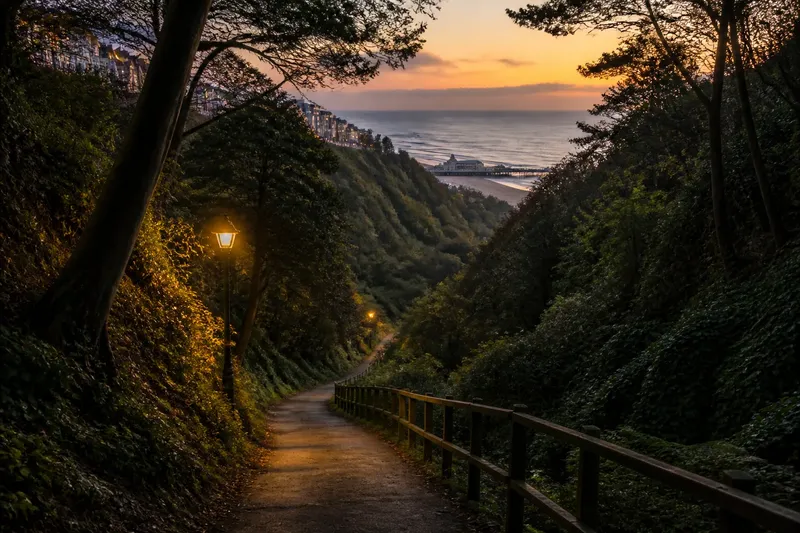
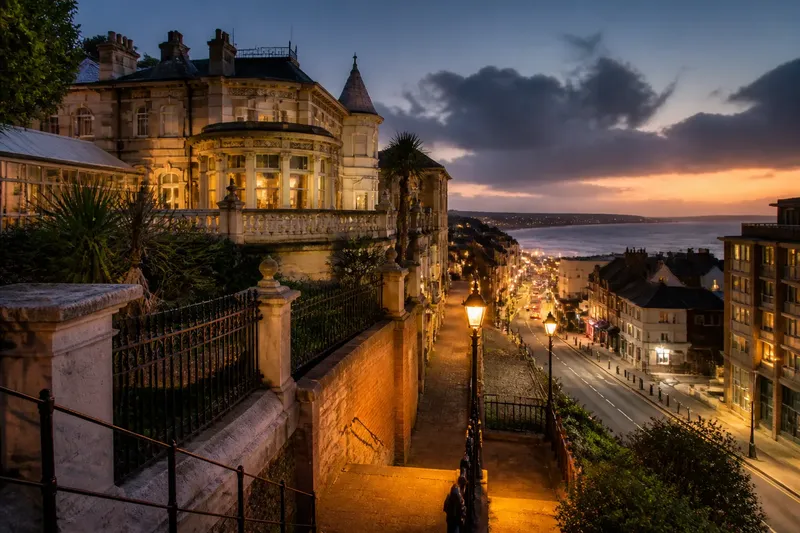
Promenade or Cliff-Top Walk: Two Ways to Read the Shore
A Bournemouth promenade or cliff-top walk reveals different details of the shore; use this simple morning plan to notice water, landform and changing views.
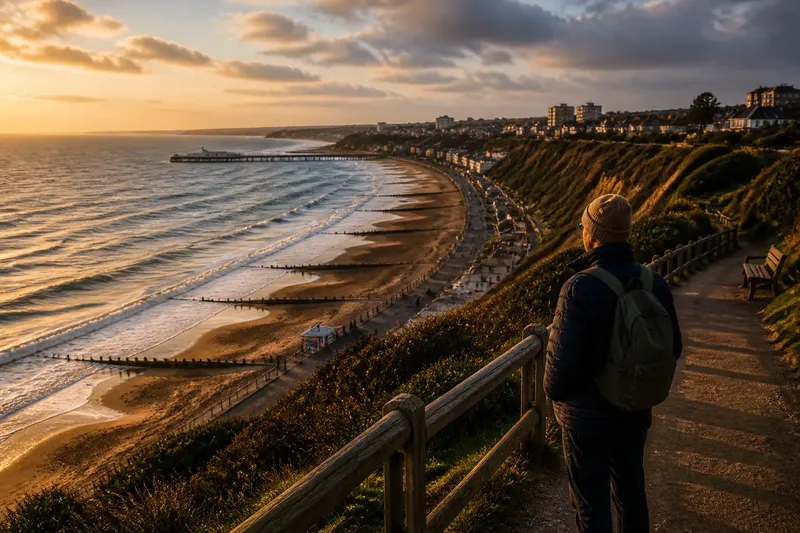
On a Bournemouth promenade or cliff-top walk, the same stretch of coast can seem to tell two different stories. From the lower path, a wave folds over the shingle and leaves a dark seam; above, the coastline curves away, and the path itself becomes part of the view. Choose your route by asking what you want to notice, then give each position enough time to answer.
This is not a contest between a “better” walk and a lesser one. The promenade brings you close to the water’s edge and its small changes. A cliff-top path gives you a wider view of the shore’s shape, the built edge and the relation between land and sea. For a useful comparison, plan a morning that includes one lower stretch and one accessible higher viewpoint, with a pause between them.
Begin by choosing what you want the coast to reveal
Before setting out, name one thing to watch for. It might be the direction of the wind, the movement of the tide, the change from beach to built frontage, or how a headland alters the view. One question is enough to keep the walk attentive without turning it into homework.
Check the local tide information and weather forecast before you leave. A high tide can change the amount of beach visible from the promenade; wind, rain or poor visibility can make an exposed upper path less appealing. Choose a route and footwear that suit the conditions, and use signed paths rather than informal shortcuts near the cliff edge.
For a relaxed morning, allow time for two unhurried pauses, one at each level. Carry water and a light layer, and keep a phone or camera tucked away for the first few minutes. Looking before framing a picture often makes it easier to notice what the camera would otherwise crop out.
The promenade brings small coastal changes into view
From the promenade, attend to the near field: the strip of wet and dry beach, the texture of the shingle, the line where foam thins, and the sounds that arrive from the water. You may notice that the sea does not move as a single sheet. Swash runs up the shore, then drains back through the stones; small waves arrive at different angles, making the waterline uneven.
The lower viewpoint also makes the transition between public space and beach legible. Notice where a path meets an access point, where seating faces the water, and how a railing or shelter frames the view. These details show how people are guided towards the shore and where they can stop without blocking a route. They are part of the coastal experience, not merely scenery around it.
Look along the promenade as well as out to sea. A long, low route can make the shoreline feel continuous, even when buildings, beach access points or changes in the beach interrupt it. Turn around now and then: the landward view may show how the promenade sits against the town, while the seaward view keeps attention on the horizon.
The cliff-top path explains the larger shape of the shore
From above, the eye can follow a longer sweep of coast. The beach becomes a band between water and land, while bends, projecting points and changes in the built frontage stand out more clearly. This wider view is useful for reading orientation: which way the shoreline turns, where one section seems to open out, and how the sea occupies the view beyond the town.
Notice what the elevated position includes that the promenade leaves out. Rooflines, gardens, path edges and slopes can appear together, giving a stronger sense of how the public route meets the town. The higher outlook also lets you compare the visible beach with the waterline: a broad expanse of shore from above may look quite different when you later stand beside it.
There is a trade-off. Distance makes patterns easier to see but softens small details. A cliff-top view cannot show the feel of damp shingle underfoot or the precise edge of a receding wave. Nor should you approach the edge to improve the picture; stay on the signed path and use a safe, established viewpoint.
Let a morning move between the two viewpoints
Start on the promenade while the light is still changing. Walk at an easy pace and choose a spot where you can look both along the shore and towards the water. Pause to notice the beach’s surface, the sound of the waves, and the route’s practical features: access, seating, shelters or signs. Avoid trying to record everything. A few specific observations will be more useful than a long list of impressions.
Next, make your way to a signed route or viewpoint above the shore. Use a public path and follow local signs; do not assume that every slope or opening is a permitted way up. Once at a safe outlook, turn first towards the sea, then along the coast, then back towards the town. The change in direction helps separate the broad coastal shape from the details of the built edge.
Pause for a drink or a short rest before returning to the promenade, if the route allows. That gap matters: it gives you a chance to remember what looked different rather than simply collecting two similar photographs. On the way back, look for one detail that connects the views, such as a distinctive bend in the shore or a line of buildings visible from both levels.
Say you begin near a familiar promenade stretch on a breezy morning and want to understand why the beach seems to narrow around a bend. From the lower path, you notice where waves reach the shingle and where the beach’s wet edge curves. At a signed upper viewpoint, you can see the bend as part of a longer sweep of coastline. The expected result is not a definitive explanation of the shore, but a clearer distinction between the local waterline and the larger shape you can see from above.
What changes between a promenade and cliff-top walk?
Which route is better for noticing the waves?
The promenade usually gives a closer view of waves, foam and the changing edge of the beach. From a cliff-top path, the water’s movement reads more as a pattern across the shore than as a sequence at your feet.
Which viewpoint makes the coastline easier to understand?
A safe upper viewpoint often makes the coast’s bends and longer contours easier to read. The promenade is more revealing for the details that make up one small stretch of that larger shape.
Can one morning include both kinds of walk?
Yes, if a signed route connects a lower promenade with a suitable public viewpoint and the conditions are comfortable. Leave enough time for pauses and choose a shorter outing rather than hurrying between levels.
What should I check before choosing a route?
Check the forecast, tide information, access notices and the current condition of public paths. Where access or safety depends on signs, local rules or the instructions of the relevant authority, follow those directions.
Use a few field notes to compare what you saw
A small notebook is more helpful than a complicated recording system. Write two or three short observations at each level, keeping them tied to things you can point to. For example: “foam line angled towards the steps” is more useful later than “the sea felt restless”. Avoid judging the whole coast from one moment, since light, tide and weather can alter what is visible.
- At the promenade: note the waterline, beach texture and one sound.
- Along the route: record where access points, seats or shelters meet the shore.
- From above: note a bend, a change in frontage or the length of coastline visible.
- At both levels: look for one feature you can recognise from each position.
- Before leaving: write down what the higher view clarified and what it could not show.
There is little value in chasing a perfect photograph or trying to identify every distant feature. If a view is hazy, take it as a limit on what you can see rather than a puzzle that demands a closer approach. The point is to compare positions, not to collect proof or force a conclusion.
Choose the route that fits the question you brought
When you want to attend to the water’s immediate behaviour, start low. When you want to understand the shore’s direction and broad form, seek a safe upper outlook. If both questions matter, make the morning a short circuit or out-and-back that links the views without rushing them.
A Bournemouth promenade or cliff-top walk works best as a pair of perspectives, not a verdict on the coast. As you leave, keep one unanswered question for another visit: perhaps whether the same bend looks different at another tide, or which buildings remain visible from both levels. That gives your next walk a precise point of attention while leaving the shore free to change the answer.